Introduction:
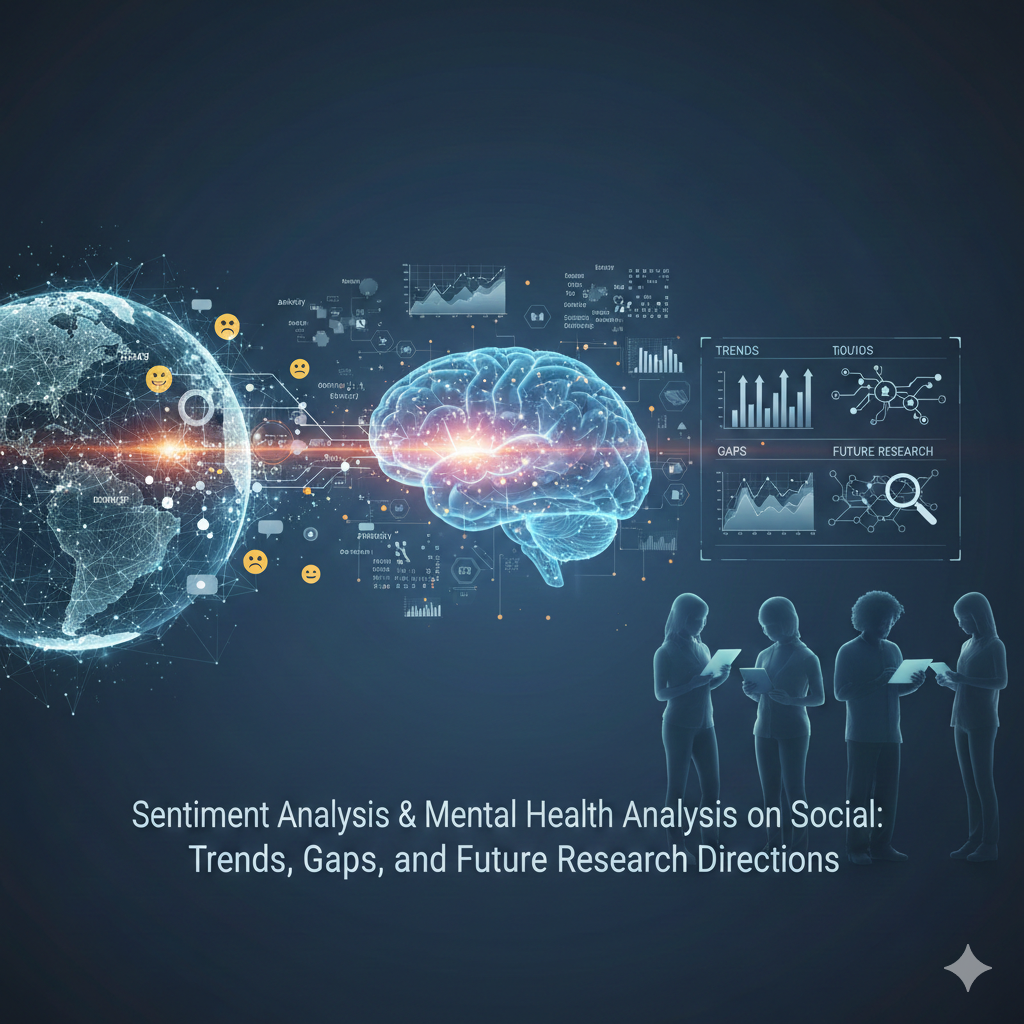
Social media has become one of the largest data sources for Mental Health Analysis. Millions of people express their emotions, stress, and personal struggles online—making platforms like Twitter, Reddit, and Instagram valuable for Social Media Sentiment Analysis. A recent Comparative Study titled “Trends and Gaps in Sentiment-Based Mental Health Monitoring on Social Media” examines how Sentiment Analysis and AI techniques are used to detect early mental health signals such as stress, anxiety, and depression.
This SEO-optimized article explains the study’s key findings, trends, research gaps, and the future of AI in Depression Detection and mental health monitoring.
1. What Is Sentiment-Based Mental Health Analysis?
Mental Health Analysis through Sentiment Analysis uses AI to evaluate the emotional tone of social media posts. These models can identify:
- Negative emotions
- Stress indicators
- Behavioral changes
- Early signs of depression
Researchers use Social Media Sentiment Analysis to track public psychological states and detect patterns that may indicate mental health concerns.
2. Key Trends in Social Media Sentiment Analysis
According to the Comparative Study, the field is evolving rapidly.
a. Rise of Deep Learning and Machine Learning Models
Modern research heavily relies on Deep Learning and Machine Learning methods such as:
- LSTM & GRU
- CNNs
- BERT, RoBERTa
- Transformer models
These models outperform older algorithms by capturing emotional nuances and improving Depression Detection accuracy.
b. Platform-Based Mental Health Analysis
Most studies focus on:
- Reddit mental health forums
- Twitter real-time emotional posts
Emerging platforms like TikTok and Instagram remain underexplored in Social Media Sentiment Analysis despite their huge user base.
c. Multimodal Data Is Becoming Essential
The study highlights the growing use of Multimodal Data, combining:
- Text
- Images
- Emojis
- Videos
- Behavioral patterns
Multimodal analysis provides a more realistic understanding of user emotions.
d. Ethical and Privacy Concerns
As Mental Health Analysis grows, so does the emphasis on:
- Data privacy
- User consent
- Limiting algorithmic bias
- Ethical use of AI for depression detection
3. Research Gaps Identified in the Comparative Study
Despite progress, many challenges remain.
a. No Standardized Datasets
Most studies use custom or small datasets, making results hard to compare across multiple papers.
b. Weak Multilingual and Cross-Cultural Performance
AI sentiment models perform best on English and struggle with:
- Other languages
- Cultural differences in emotional expression
This affects the accuracy of Mental Health Analysis worldwide.
c. Hashtag-Based Labeling Issues
Relying on hashtags like #depressed for ground truth leads to unreliable Depression Detection.
d. Lack of Clinical Validation
Many AI models are not reviewed by mental health professionals, limiting real-world reliability.
4. Importance of Sentiment Analysis in Mental Health
Social media-based Mental Health Analysis helps:
- Detect early warning signs of depression
- Understand population-level emotional trends
- Support public mental health strategies
- Improve early intervention through AI
Using Sentiment Analysis, researchers can identify patterns that traditional mental health surveys often miss.
5. Future of AI in Mental Health Monitoring
The study suggests major improvements needed for the field:
✔ Build diverse, multilingual datasets
✔ Improve Deep Learning and Machine Learning architectures
✔ Expand Multimodal Data research
✔ Ensure ethical AI practices
✔ Validate models clinically for reliable Depression Detection
These advancements will make AI-driven Social Media Sentiment Analysis more accurate, trustworthy, and impactful.
Published By
Dr. Muhammad Azam
💬 Comments (0)
No comments yet. Be the first to share your thoughts!
📝 Leave a Comment